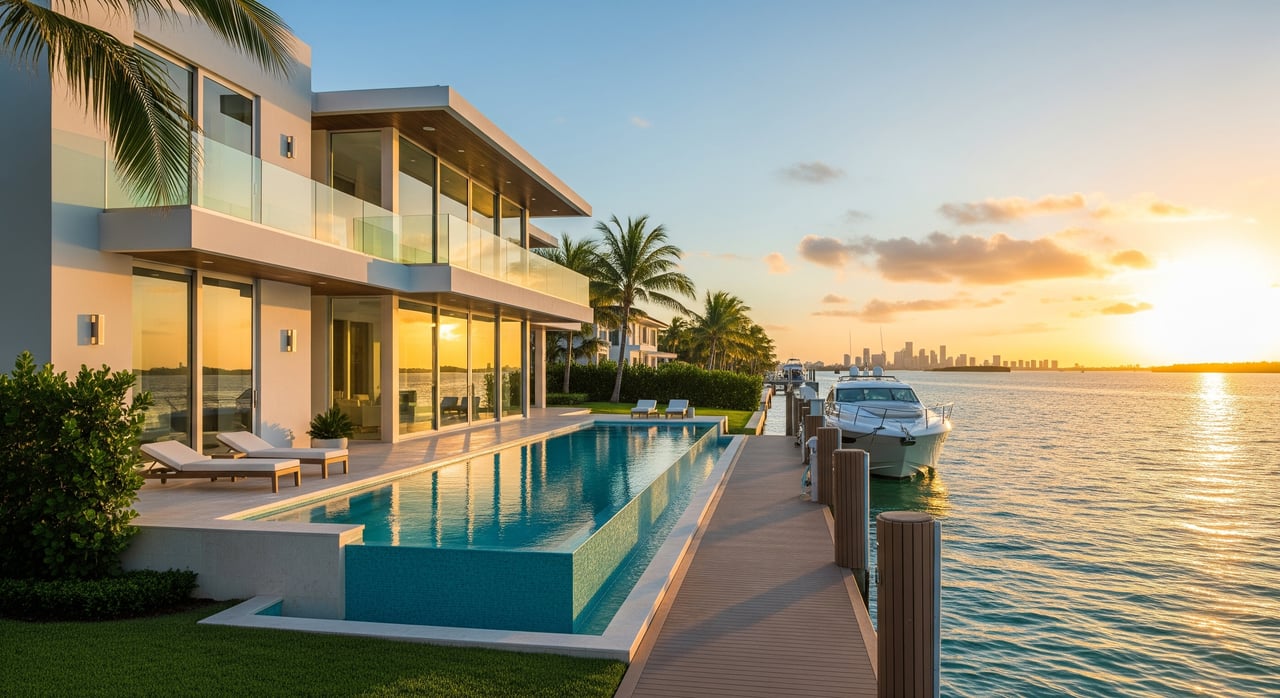
Shopping for “waterfront” in Key Biscayne can feel exciting and confusing at the same time. Listings use terms like bayfront, canal, dock, and bridge clearance that can change your boating access, insurance costs, and long-term plans. You deserve clear definitions and a simple way to verify the details before you bid. In this guide, you’ll learn the terms that matter, how they apply on the island, and a practical checklist you can take to showings. Let’s dive in.
What “waterfront” means here
Bayfront vs. canalfront vs. basin
- Bayfront. You are directly on Biscayne Bay with wide views and quick access to open water. You get premium vistas and faster routes to the Atlantic through the bay’s channels. Expect more wind and wave exposure and higher storm surge risk compared with canals.
- Canalfront. You sit on a canal that connects to the bay. Water is more sheltered and often quieter. Depths may be shallower in spots and turning space tighter, which can limit larger vessels unless there is a nearby turning basin.
- Lagoon or basin. Enclosed or interior water areas offer the most shelter. Some have strict rules on wakes and dock size. Access for larger vessels can be limited or controlled by an association.
Your best fit depends on your priorities. If you want speed to open water and big-sky views, bayfront may suit you. If privacy and protected dockage top your list, canalfront or a basin could be ideal.
Navigation terms that shape access
Depth at low tide
Depth is often stated at mean low water (MLW) or mean lower low water (MLLW). These tidal datums matter. A listed “6 feet” without the datum can be misleading if your boat is draft sensitive. Always ask for the depth at low tide and the exact datum, then confirm the route on the NOAA nautical chart viewer. You can view channels, buoys, and bridge notes on the official viewer from NOAA’s Office of Coast Survey. Check the path from the property to the nearest deepwater channel to see where depths or shoals could affect you. Use the NOAA chart viewer to verify.
Channels and fairways
A channel or fairway is a marked route that is sometimes dredged and maintained. A private channel might be dug or maintained by a community or owners. The key question is who maintains it and how often. This affects your transit reliability and potential assessments.
Bridge clearance and air draft
Bridge clearance is the vertical space under a bridge at a specific tide, often measured at mean high water. Always confirm the datum used for the posted clearance and compare it to your boat’s highest point. If your route passes under a fixed bridge, check both the clearance and the local tide range. For movable bridges, confirm opening procedures and schedules. You can cross-check bridge notes and routes on the NOAA chart viewer.
Turning basins and maneuvering room
A turning basin is the open water area needed to turn a vessel. Narrow canals and short bulkheads can make turning larger boats difficult. Ask what is the maximum vessel length the dock can handle without assistance and confirm where you can safely turn.
Aids to navigation
Buoys, daymarks, and fixed aids mark the centerline of channels and warn of shoals. Before you buy, review the charted route from the dock to the bay so you know where safe water is and what markers you will follow.
Tidal range and currents
Biscayne Bay’s tidal range is modest, but currents and wind-driven water levels can change clearances and make docking easier or harder on certain days. Local knowledge is valuable. Speak with a marina or harbormaster to set expectations for your specific route and vessel.
Dockage and seawalls: what to inspect
Dock types
- Fixed docks. Pile-supported and sturdy. Good for consistent boarding heights. Construction and modification typically require permits.
- Floating docks. Rise and fall with the tide, which can simplify boarding. They may need more maintenance and proper pile guides.
- Finger piers. Short piers that create a slip. Check width and length for your boat’s beam and LOA.
- Boat lifts and davits. Keep your boat out of the water to reduce growth. Confirm lift capacity against total boat weight, including fuel and gear.
- Wet slips at marinas. Offer utilities and managed dockage. Transient slips are for short stays and may be helpful if your private dock cannot handle your vessel.
Seawall types and condition
Common seawalls include concrete, steel or vinyl sheet-pile, timber, and rock riprap. Look for leaning, cracks, spalling, tie-back failure, or erosion at the base. Seawall integrity protects your land and supports any attached dock. Weak conditions can affect insurance and trigger costly repairs.
Permits and maintenance responsibilities
Docks, lifts, and seawalls often need approvals from multiple agencies. In Miami-Dade, many in-water projects involve a Class I permit administered by the county. Review county and state requirements before planning changes or replacements. For context, see Miami-Dade’s guidance on Class I permits and the state’s Biscayne Bay Aquatic Preserve information from the Florida Department of Environmental Protection. The Aquatic Preserve has protections for seagrass and mangroves that influence design, shading, and piling placement. Learn more about the Biscayne Bay Aquatic Preserve.
Some communities share dredging and seawall costs, and some canals are maintained by associations or owners. Always request maintenance agreements, assessment histories, and past permits in writing.
Federal and municipal touchpoints
Projects that impact navigable waters or wetlands may require a federal permit. The U.S. Army Corps of Engineers oversees this process. Review the program overview here: USACE Regulatory Program and Permits. You should also confirm any local ordinances that affect dock size, seawall height, and construction timing. The Village of Key Biscayne codifies local rules; consult the Village Code of Ordinances for reference.
Environmental rules that affect design
Seagrass and mangroves near your parcel can limit dock placement, width, and shading. Trimming mangroves typically requires permits and mitigation plans. Expect stricter conditions inside protected areas of Biscayne Bay. Early clarity on these limits helps you avoid redesigns and delays.
Wake zones and boating behavior
Speed and wake rules are set by the Florida Fish and Wildlife Conservation Commission and local governments. You may see slow-speed or idle zones near marinas, canals, and sensitive areas. A nearby no-wake zone can reduce wake impact and noise at your dock, but it can also extend your time to reach the open bay. Review Florida’s boat operation rules on the FWC regulations page, and always check posted signage along your route.
Flood zones, elevation, and insurance
Many Key Biscayne properties fall within higher-risk coastal flood zones. Insurers will look at your FEMA flood zone, building elevation, and historical claims. Seawall condition can be part of the overall risk picture but does not remove flood or surge exposure. Before you offer, review the property’s FEMA Flood Insurance Rate Map designation and request the elevation certificate. You can confirm floodplain data using FEMA’s Flood Map Service Center.
Due-diligence checklist for showings
Use this quick list to validate a waterfront listing.
Documents to request
- As-built site plan and survey showing dock, bulkhead, setbacks, and elevations.
- Copies of permits and permit history for the dock, lift, and seawall at the county, state, and federal levels.
- Maintenance agreements or HOA covenants for dredging, seawalls, and channel upkeep.
- Any recent marine inspection or dock survey. If none, plan a marine survey.
- Title exceptions and recorded easements that affect water access or a private channel.
- FEMA flood zone, elevation certificate, and recent flood/wind insurance details.
- Local boat size rules, including maximum length and beam at the dock or in community channels.
Questions to ask
- What is the depth at the dock at mean low water, and which datum is used (MLW or MLLW)?
- Is the route to the bay dredged and maintained, who pays, and when was it last dredged?
- Are there limits on dock size or piling type due to seagrass or Aquatic Preserve rules?
- Has the seawall or dock been rebuilt? Get dates, permits, and contractor names.
- Are any assessments planned for seawalls or dredging? Any open permits or violations?
- What is the typical transit route and time to the nearest deepwater channel and the Atlantic?
- Are there posted no-wake or slow-speed restrictions along the route? Any seasonal changes?
Who to consult
- A licensed marine contractor or dock builder for conditions and a repair estimate.
- A licensed marine surveyor to inspect pilings, lift capacity, and to confirm depths and clearances.
- A coastal engineer if seawall integrity or height is a concern.
- A title company or real estate attorney to review easements and permit history.
- A local harbormaster or marina operator for route specifics and wake zone boundaries.
- A flood insurance agent familiar with Miami-Dade coastal underwriting.
Examples: match property to boating style
- Frequent offshore runs on a larger boat. Bayfront can offer faster access to open water and turning room. Confirm depth at low tide, the route’s channel markers, and any fixed bridge clearances on a spring high tide. Balance view premiums with potential wave exposure.
- Protected dockage for a center console. Canalfront often provides more shelter and privacy. Verify turning space near your bulkhead, any shoaling history, and who is responsible for dredging the canal mouth. If you plan to install a lift, confirm permitted sizes first.
Key Biscayne local notes
- The island sits between Biscayne Bay and the Atlantic, so orientation matters. Bay mouth areas can see more wind and wave energy, while interior canals are more protected.
- Public and state park lands, including Bill Baggs Cape Florida State Park, may influence permitted dock lengths and nearby public access points.
- Common routes involve the Rickenbacker Causeway and nearby channels. Confirm bridge clearances and procedures if a movable span is part of your route, and check tide timing when planning passages.
- On-island marina capacity is limited. If your vessel is larger, you may consider off-island berthing in nearby areas like Coconut Grove or Miami. Factor this into your daily routine.
The bottom line
“Waterfront” is not one-size-fits-all in Key Biscayne. Bayfront, canalfront, and basin homes trade off speed to open water, shelter, privacy, and long-term maintenance obligations. The smartest move is to confirm the technical items in writing. That includes depth at mean low water, bridge clearance by datum, permit history for the dock and seawall, dredging responsibilities, and your flood zone and elevation.
If you are ready to evaluate a property or need a second set of eyes on permits, charts, and insurance details, connect with a local expert who blends market insight with a disciplined process. For a private, concierge-level review of your shortlist, reach out to Camila Paiva.
FAQs
Is bayfront always better than canalfront in Key Biscayne?
- Bayfront often offers wider views and faster routes to open water, while canalfront provides more shelter and privacy. The right choice depends on your boat size and lifestyle.
How can I confirm my boat fits a listing’s dock?
- Ask for depth at mean low water with the tidal datum, slip width, distance to a turning basin, and any HOA or permit limits. Cross-check bridge clearances and routes on the NOAA chart viewer.
Who pays to dredge a shoaled canal or private channel?
- It varies. It can be municipal, HOA, or individual owners for a private channel. Request written maintenance agreements and past dredging records.
Do I need permits to replace a seawall or dock?
- Generally yes. Expect county and state approvals, and possible federal review. Start with Miami-Dade’s Class I permits and check state protections in the Biscayne Bay Aquatic Preserve.
Will a dock lower my flood insurance premium?
- Not usually. Flood premiums depend more on your FEMA zone, elevation, and claims history. Verify your designation on FEMA’s Flood Map Service Center.
